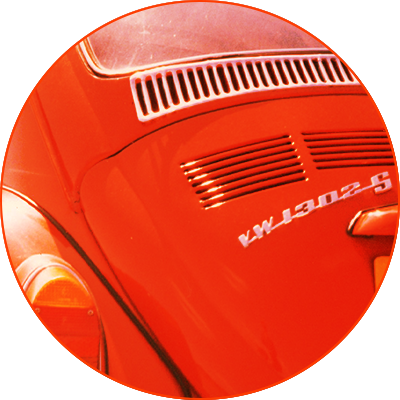
On the Wedenesday I went to visit Paul at South Coast Customs & Classics, however, it turned out I could do him a favour. As I was driving to Charlton Marshal, just outside Blandford, I saw Paul in a bus-stop layby with a very smart blue Beetle with the engine lid open. Luckily there was a bus-stop layby opposite, so I pulled over to see what was going on. The blue Beetle had an ignition failure while on the way to the MOT station and was only 100 metres short of getting there but the garage didn’t want to MOT the car if it couldn’t be driven in. As it happened, I had a tow rope in the boot of my Corsair and offered to get Paul and the Beetle back to his workshop. Once back to the workshop and the Beetle pushed in to the work bay, I got to meet Ash his new work colleague, for the past couple of years.
I explained all the issues I had been having with painting and what I had worked out after emails with Advance Paints and online reading on their website. What I had actually got wrong was my paint/activator mix ratio on the last 3 occasions. I had been prepping as if it were for primer which is 4:1 (& 10% Thinners) when I should have just done a 2:1 paint/activator mix. I brought along my rear valance to show the results I had been getting. Paul got a bucket of water with some 1500 grit wet & dry paper and flatted back the orange peel. He then polished it with a cutting compound which produced a super smooth shiny result, although there were contaminents in the paint. So Paul proved that what I had done was salvageable and should I get orange peel, this was the best way to treat it.
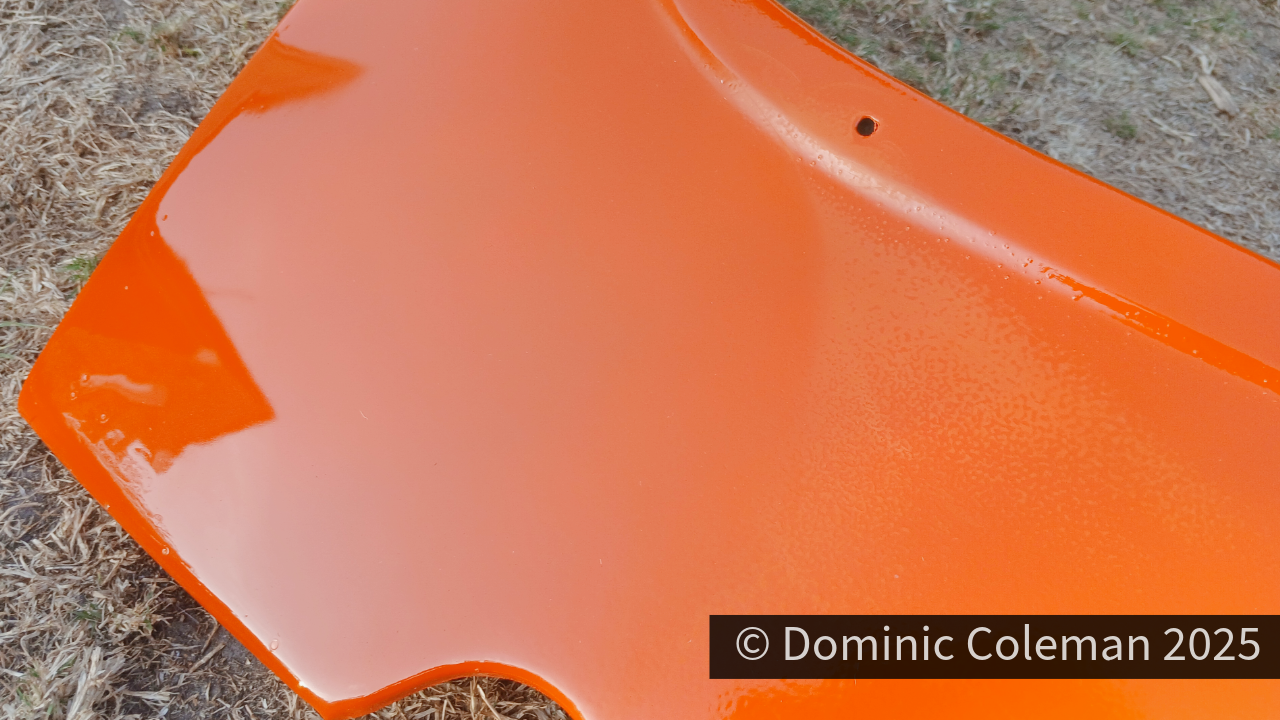
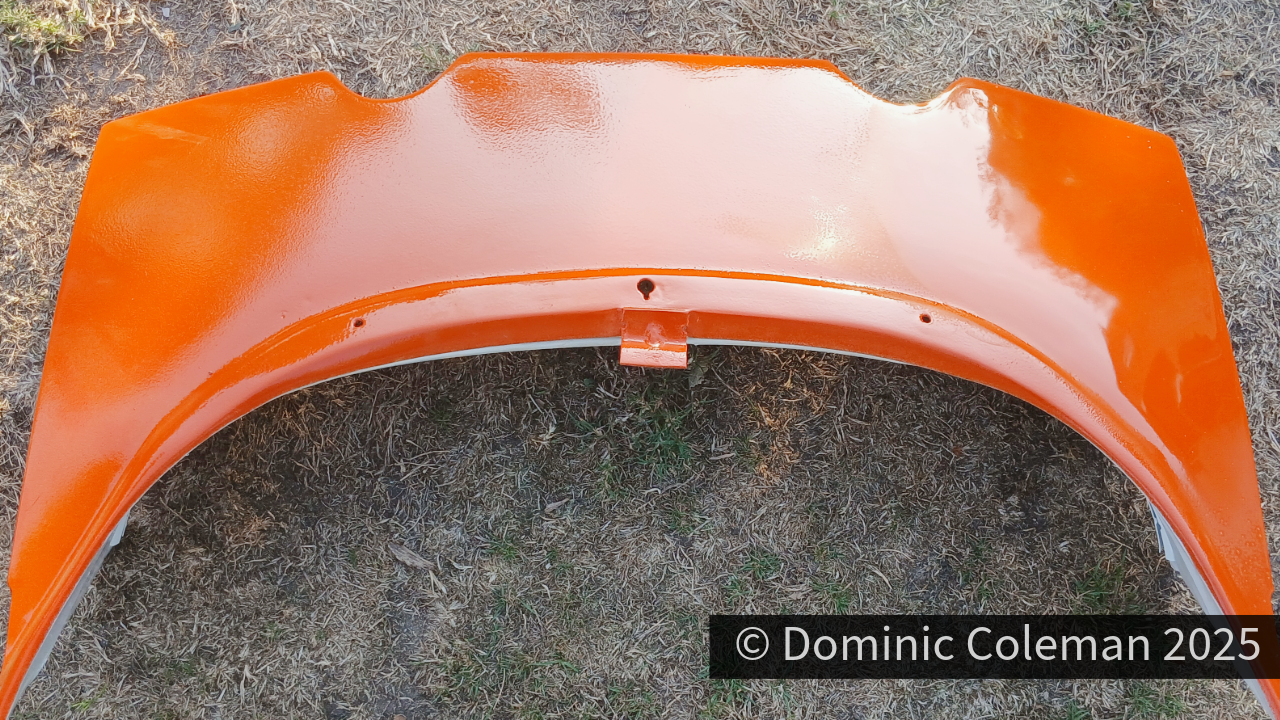
Boosted with confidence by Paul and Ash I was eager to retry painting with the correct mix, and wasn’t long before I was rubbing back and smoothing out more surfaces on the beetle bodywork. The aim this time was to paint the dash, dash parts, front scuttle, front quarters, front valance and rear quarters up to the swage line. Extra care was taken to double check air pressure at the gun, the 2:1 paint mix and that all surfaces to be painted were clean of contaminents and dust.
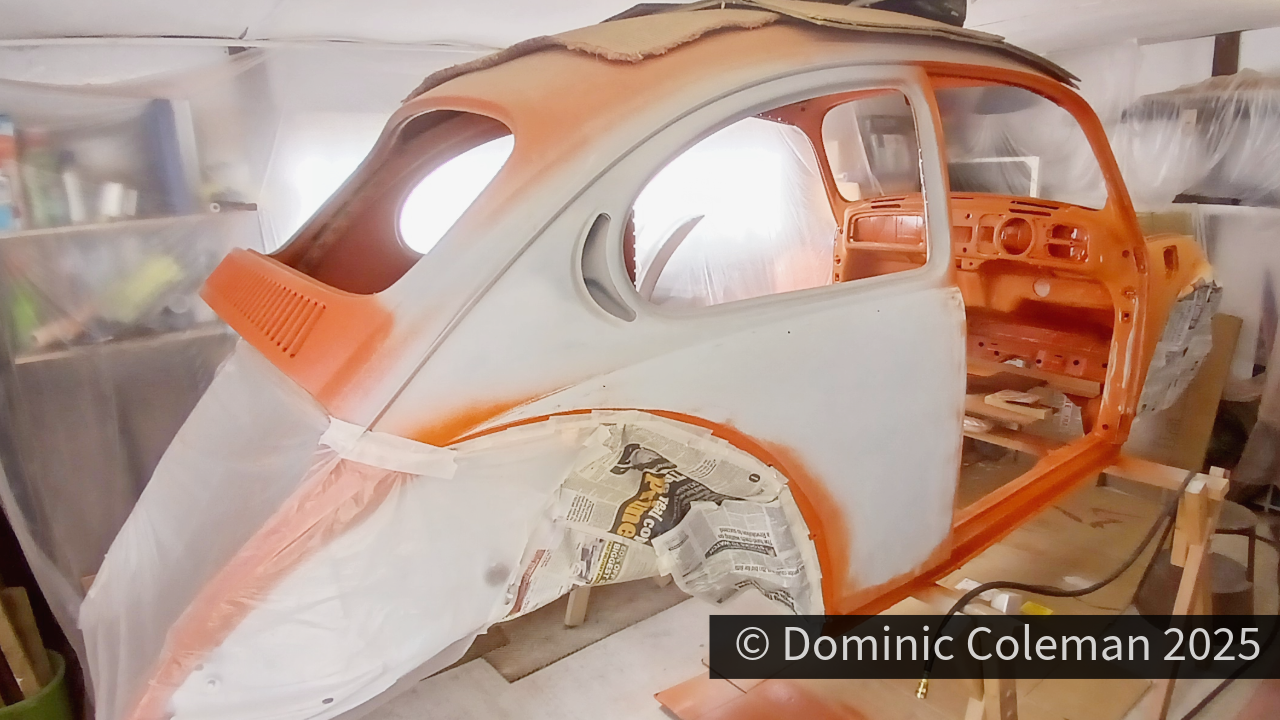
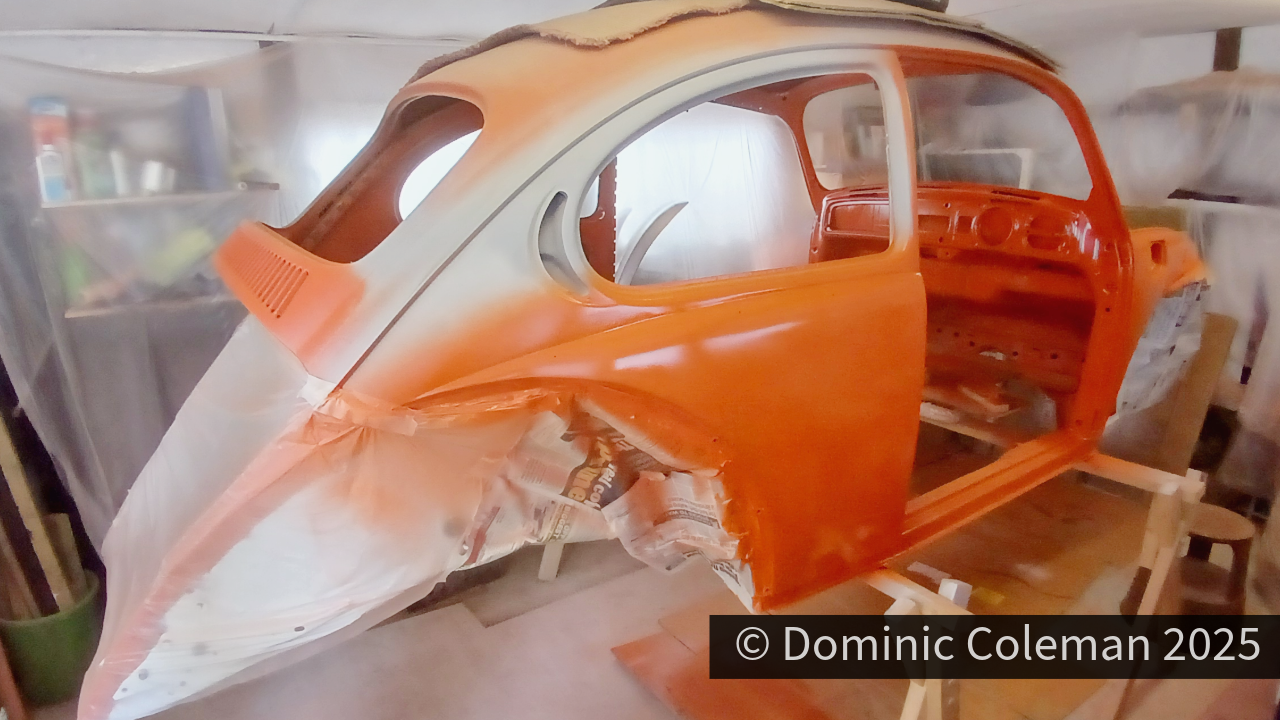
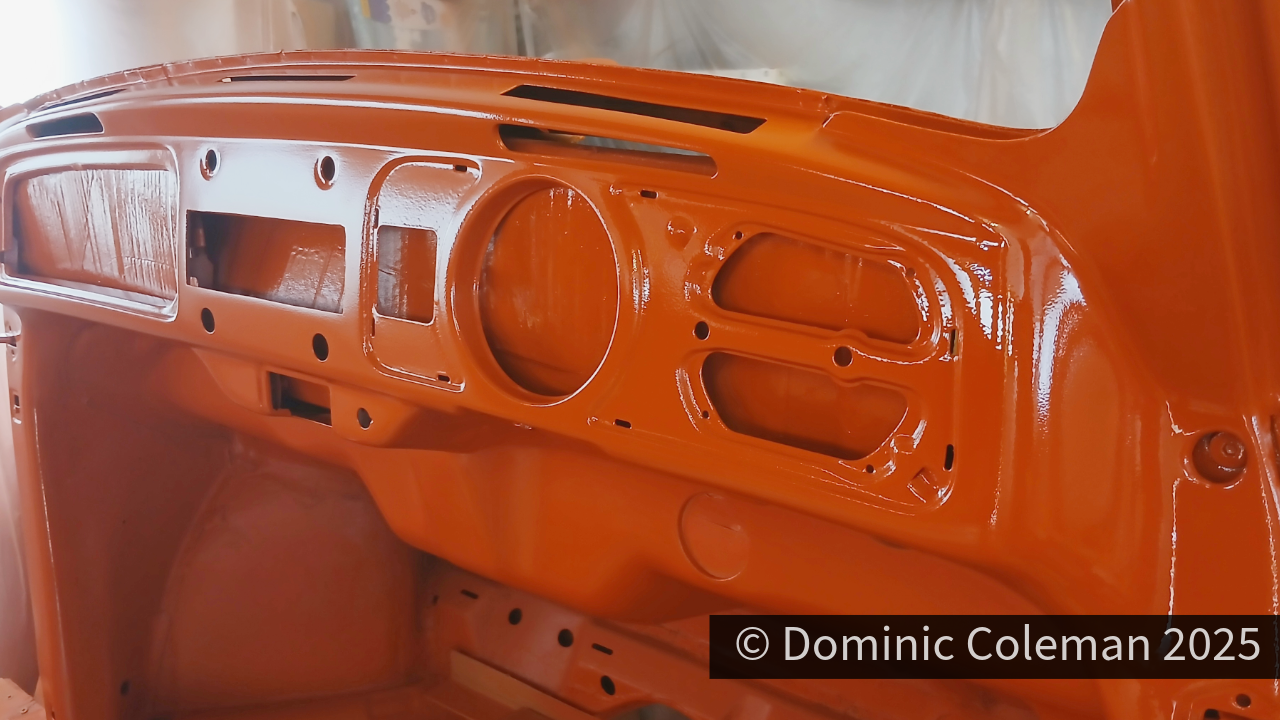
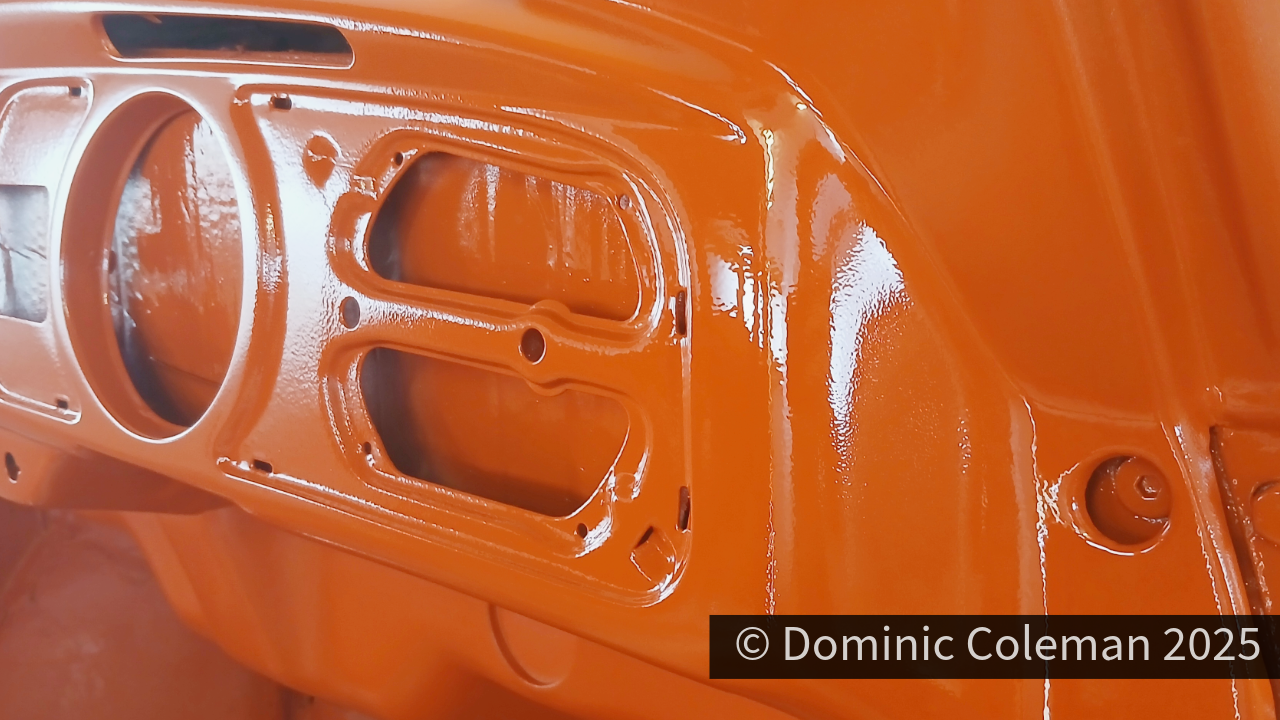
The settings on my compressor were 7 bar and working pressure at the gun was 2 bar (not sure why it drops so much). On the gun, fluid flow was three full turns back out from closed, fan wide and air flow fully open. There was a slight air leak from the water trap and may change it out for another type as it had never sealed properly without PFTE tape. I planned my painting movements around the car and started with a single light pass. I then waited for upto 5 minutes while I added the remainder of the paint to the spray gun cup. I then applied a wetter (heavier) coat of paint in the same order as before. I was hoping to get a third coat on but I had used up all the paint quite quickly this time.
It turned out with results similar to my first attempt 2 years ago, still with orange peel but without the runs, drips and sagging paint. As demonstrated to me, the orange peel effect will flat out with wet and dry and then buff up with a compound polish. I plan to re-do the engine bay again in white as it has orange overspray again and as I have a bit left of the original 2 litre tin of orange paint I may do one more coat to ensure I have good coverage on the dash and front scuttle before flatting back to polish.